Cross dock operations reward speed and punish sloppiness. You are taking freight in, sorting it to the right outbound doors, and sending it back out with minimal or no storage dwell. A well‑tuned team can turn trailers in under an hour and keep detention penalties near zero. A poorly trained team loses labels, misroutes pallets two doors down, and sets off a chain of rework that burns a whole shift. Training is the difference.
This guide focuses on training for high‑velocity environments, the kind where dozens of doors are hot at once and minute‑by‑minute coordination matters. The examples draw from cross docking in retail replenishment and parcel consolidation, though the principles apply across most cross dock facilities and service models.
What “high velocity” really means on the dock
Velocity is not just speed. It is predictable speed under load. On a quiet Tuesday, almost any crew can make their numbers. Peak season on a rainy Friday with three late arrivals, two damaged pallets, and a WMS hiccup, that is when high velocity shows its face.
In practical terms, high‑velocity cross docking looks like this: inbound trailers pre‑assigned to doors; the first case scanned within three minutes of chock placement; average dwell under 45 minutes for live unloads; at least 98 percent on‑time departure for outbound linehauls; and quality metrics above 99.8 percent for carton accuracy. If your cross dock warehouse runs a store‑door sort, the crew must consistently hit more than 300 lines per hour per team on standard assortments without misroutes. The numbers vary by operation, but the pattern holds. Speed plus repeatability, measured daily, not seasonally.
Training must shape muscle memory, not just awareness, so the team performs when the plan meets the mess.
Start with the flow, not the job titles
Most new hires learn a job slot, not the flow. That is backward for a cross dock facility. Before teaching someone a pallet jack or a scanner workflow, teach the river they are stepping into.
Walk through the path of a single pallet from the inbound tail to the outbound nose. Show the handoffs: check‑in, strip and stage, identify and sort, load confirmation, and seal. Explain how upstream decisions ripple downstream. If the checker misses a vendor slap‑on label under stretch wrap, the sorter will chase ghosts when carton scans mismatch. If a loader breaks the pattern to save 30 seconds, the next facility loses 15 minutes digging for stop‑sequence cartons.
Good training uses the building itself as the classroom. Stand at Door 12, watch an inbound arrive, and narrate what should happen minute by minute. Then move to the outbound side and do the same. Let trainees see how the cross docking services team uses one system of truth, even when they have different tasks and supervisors.
Define the skills, then build the drills
High‑velocity performance comes from a few core skills done perfectly and fast. These skills vary slightly by network and system, but they usually include scanner proficiency, product and label recognition, equipment handling, safe and efficient movement, pattern loading, exception handling, and communication within a slam‑busy environment.
You cannot just tell people to be quick and careful. You have to design drills that isolate each skill and ramp complexity over time. If you use a WMS with RF scanners, start in a “sandbox” task code that writes to training tables, not production, so people can make mistakes without poisoning live data. If that is not available, create a mock inbound using empty cartons with realistic labels and a small corral of pallets.
One training plan that has worked across multiple cross dock warehouses uses three tiers:
- Fundamentals lab: short, focused drills on scanners, case recognition, dock safety, and hand signals or radio protocols. The goal is clean mechanics at a slow pace. Flow integration: simulated unload to load with time boxes and light pressure, adding typical exceptions like a mixed pallet or a damaged SKU. The goal is full‑process understanding. Pressure testing: live shadow shifts with targets for lines per hour and errors, rotated between inbound, sorter, and loader roles. The goal is resilience and speed under noise.
Each tier lasts a different number of sessions depending on the person, usually a week in total for entry roles and two to three weeks for lead or driver roles. That timeline shortens for experienced hires, but nobody skips pressure testing.
Teach labels like a language
Misroutes in cross docking often start at the label. People think they are scanning the right barcode, but they are not. Retail inbound can arrive with vendor UPCs, distributor pack labels, customer‑specific LPNs, and a transport label from the linehaul, all on one case. If your SOP only says “scan the label,” you will get wrong scans.
Training should teach a consistent label hierarchy and visual recognition. For example, show that the correct LPN always starts with a two‑letter prefix and sits near the top right. Have trainees practice ignoring tempting but irrelevant labels. Rotate examples so they see clean labels and ugly ones: smeared ink, partial tears, skewed placement under film.
Add a fast mental model for where the carton must go. On a store‑door sort, that might be a three‑part cue: route code to zone, stop sequence to slot, and special handling flags to a side stream. People who can “read a case at a glance” make fewer mistakes than those who rely entirely on the scanner to decide.
Build the cadence of movement
Speed on the dock comes from flow rhythm: how feet move, where pallets get staged, how long a forklift waits for an opening, when to roll a conveyor lane. That rhythm is learned.
Teach walking paths that keep people out of trailer pinch points and away from the swing of lift trucks. If space allows, paint or tape standard staging boxes so pallets stop in predictable places, two to three feet off the yellow line to leave room for the driver. In a true high‑velocity cross dock facility, random staging explodes into chaos by mid‑shift.
Crew leads should teach the “one motion” rule for common tasks. For example, when cutting wrap on an inbound pallet, train workers to remove top layers and expose labels in a single cycle, then push the empty wrap immediately to a bin rather than letting tails drift onto the floor. Every loose tail becomes a wheel‑grab hazard and a micro delay.
The same applies to lift truck moves. Teach lift drivers to approach straight, line up once, and commit. Back and forth micro‑adjustments are stamina killers. In a 10‑hour shift, reducing average lift‑on time by three seconds per pallet across 800 pallets saves more than 40 minutes of driver time.
Make scanners an extension of the hand
RF devices are the metronome in high‑velocity cross docking. People who fumble with menus or tilt their wrists at odd angles fall behind. Training should embed device fluency until it looks like muscle memory.
Start with the basics: scan angles, avoiding glare, and effective distances for your scanners. Show how to lock the device in one hand, tap with the thumb, and keep the second hand free for product. Eliminate the habit of setting the device on a pallet and hunting for it a minute later. Teach quick error recovery messages and when to escalate to IT or a lead.
If your cross dock warehouse uses voice picking or heads‑up displays for certain processes, integrate them early in training. Switching modalities mid‑season kills rhythm. When the system workflow changes, train it with side‑by‑side screens to show old versus new paths. People retain changes faster when they see the deltas, not just the new steps.
Balance safety and speed without slogans
High velocity does not require risky behavior. It does require a precise understanding of where real risk lives. New hires often move timidly in the wrong spots and too boldly in others. Training must correct both.
Do not wave at the general safety poster and hope. Run five‑minute focus huddles at the start of each shift that address one hazard with a concrete action. One day, it is dock plate drop‑outs when inbound drivers pull early and how to maintain chock and light discipline. Another day, it is blind corners at Doors 22 to 24 and the rule to tap the horn twice before crossing.
Use incident reviews as training, not blame. If a near miss occurs at a conveyor merge, walk the team over within 24 hours, reconstruct the sequence, and ask the group how to prevent a repeat. When recommendations become SOP, reflect them in refresher training within a week. Speed and safety improve together when crews internalize cause and effect.
Cross‑train to absorb variability
Cross docks breathe with the network. Some nights, inbound pours in for 90 minutes, then a lull hits before outbound closes. The best crews flex people between roles without a drop in quality. Training should target cross‑function confidence as an explicit outcome, not a nice‑to‑have.
I aim for each associate to be green‑lit in two adjacent roles within 30 days. A checker learns the sorter role, a sorter learns loader basics, a loader learns staging and exception handling. Leads should be strong in all roles and able to run a mini cell if the dock splits.
Cross‑training is not just labor insurance. It reduces silo friction. A loader who has lived a night on inbound will respect correct prep on staging and will give more actionable feedback. Tension between roles fades when people understand each other’s constraints.
Exception handling as a first‑class skill
Exceptions are where velocity goes to die if the team is unprepared. Every operation has its top five. Typical ones include missing or unreadable labels, damaged cases that risk a mess on the trailer, vendor packs that do not match the ASN, late arrivals that threaten outbound cut‑off, and system outages.
Create playbooks for each exception with crisp triggers and first actions. Teach the first actions as drills. For example, unreadable label: isolate the case to a marked exception zone, attempt manual lookup by PO and item, print a new LPN if authorized or call the lead within two minutes. Damaged case with spillage risk: stop movement, contain, photo document, move to quarantine, adjust counts.
During training, sprinkle exceptions into the flow integration sessions at a low rate, then higher. Do not leave this to chance on live shifts. The goal is not to make exceptions routine, but to make the team’s response routine.
Configure physical layout for teachability
A cross dock facility built only for maximum cubic throughput can be hard to train in. If you are redesigning or relocating, carve in teachable spaces. If not, you can still tweak.
Put your training corral close to live action but out of traffic, with a short mock lane and two to three pallets. Mount a spare scanner cradle and a dedicated label printer. Keep a library of sample labels from your top vendors, including problem children. Make a small wall chart that shows a standard door map, not to rely on it, but to orient novices.
On the live floor, add visual cues, not clutter. Door numbers large and readable. Color‑coded zone banners that match WMS zone naming. If you run route codes, print small door magnets with route ranges so temps can match a case to a door without stopping a supervisor. Training sticks faster when the space reinforces the lesson.
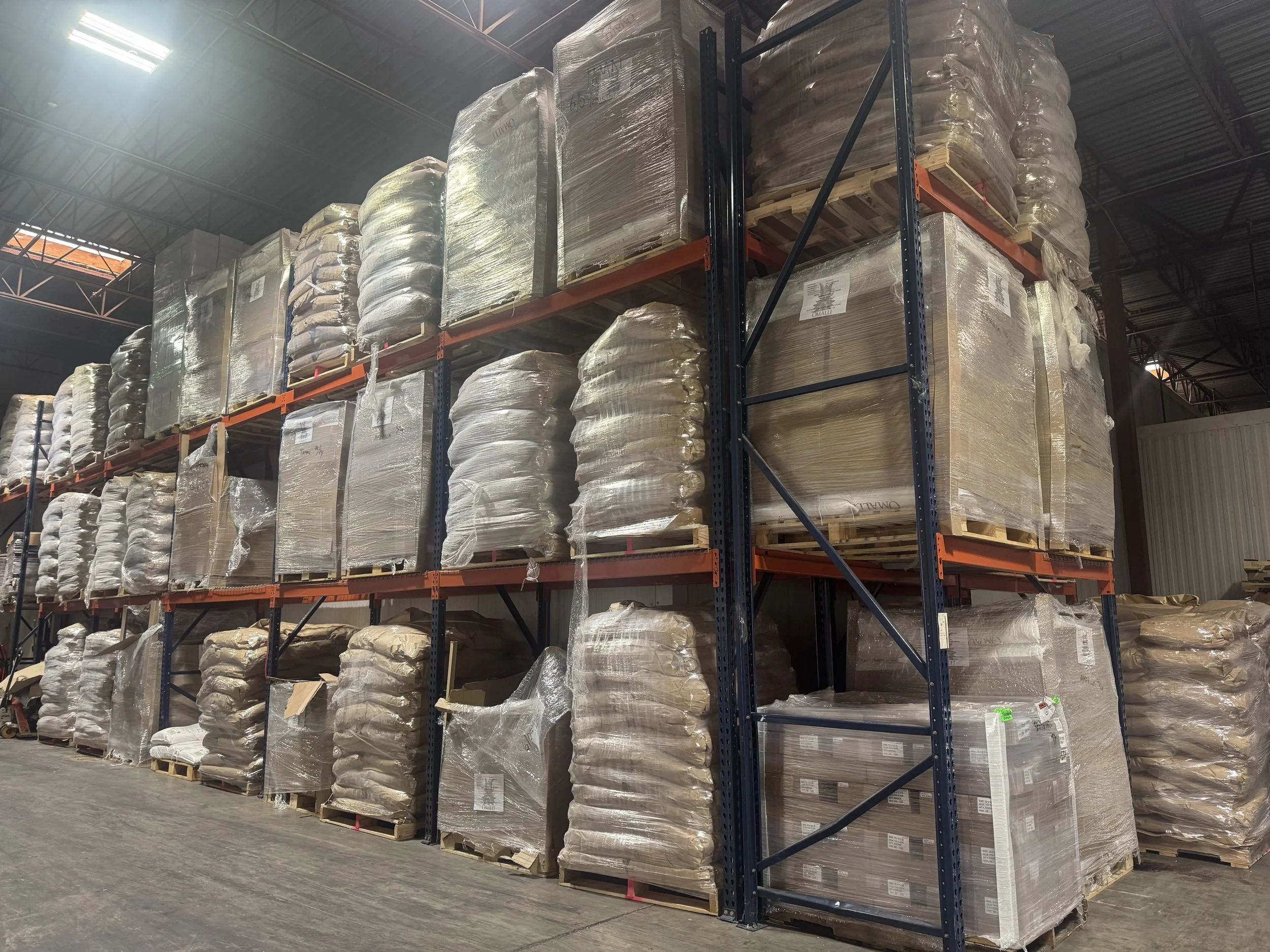
The role of data in training
In high‑velocity operations, you cannot rely purely on observation to judge training outcomes. Use data, but use it thoughtfully. Measure per‑associate scan counts, error types, average handle times from unload to assign to load confirmation, and exceptions raised per hundred lines. Track these for trainees in their first 30, 60, and 90 days and compare to tenured averages.
Avoid weaponizing the numbers. Use them to guide coaching. If someone’s scan rate is fine but misroutes spike on certain routes, dig into label pattern recognition for those routes. If a loader’s times are slow only on multi‑stop trailers, focus training on pattern building and stacking stability. Share best‑in‑class clips with the crew, not just the red cells.
For trainers, track their cohorts’ outcomes. A great trainer’s classes stabilize faster and need fewer reworks in week three. Recognize that publicly and align your shift schedule so strong trainers overlap with peak inbound windows for more real‑time coaching.
Lead the shift like an air traffic controller
In a high‑velocity cross dock warehouse, the shift lead holds the tempo. Training should include lead development, not just associate training. New leads need to learn how to balance door assignments, pre‑position equipment, and sequence breaks so the dock never loses its heartbeat.
Teach a simple planning cycle: pre‑shift plan based on scheduled arrivals and known constraints; first hour stabilization to clear jams; mid‑shift capacity smoothing across zones; last‑hour push aligned to outbound cut‑offs. Give leads a quick‑look dashboard that shows live doors, inbound dwell, outbound close times, and headcount by zone. A whiteboard with magnets works when the WMS view lags.
Lead training also covers communication style. On a loud dock, short phrases win. Replace vague calls like “We need help on 18” with “Two to inbound 18, vendor A55, heavy mix, five minutes.” Make this style part of the training so everyone expects it.
Hiring for traits that training can amplify
You can train mechanics. It is harder to train instincts. When hiring for a cross dock facility that aims for high velocity, look for pattern recognition, steadiness under noise, spatial awareness, quick but not reckless movement, and humility to adhere to a system. Experience helps, but I have seen people with no warehouse background outrun veterans because they grasp patterns quickly and respect the flow.
During hiring assessments, simulate a small sorting task with three to five destination doors using fake labels and give a short time limit. Watch how candidates approach the problem. Do they scan, think, then move, or do they move without a plan? Do they ask for the rule set after the first misroute? Those cues predict how they will behave on the dock more than a resume line.
Seasonal ramp without losing quality
Many cross docks triple volume during peak seasons. If you train temps the same way you train full‑timers, you will bog down. Adjust, but do not lower the bar on critical steps.
Shorten classroom time and move to dock‑side instruction. Focus temps on one role with a tight SOP and give them shadow partners for two shifts. Use high‑visibility vests for trainees so leads can spot them quickly. Assign temps to routes with simpler label sets and fewer exceptions. Never put an unseasoned temp on a critical outbound close without a strong loader in charge.
If you run multiple shifts, pair new temps with the most patient veterans, not just the fastest. Patience early prevents slowdowns later. Offer micro‑certifications in specific roles so temps feel progress and you can schedule based on verified capability.
Keep the culture grounded in the mission
High velocity is a culture, not a poster. Teams move faster when they believe the mission matters and they see the feedback loop. If cross docking services your cross docking services support retail replenishment, bring the store reality to the dock. Share photos of empty shelves when a route misses, and conversely, give shout‑outs when a late save prevents a stockout. If you serve manufacturing, show how a one‑hour delay stopped a line last month and what changes were made to prevent a repeat.
Make recognition specific. “Great job” means little. “Door 7 cleared a 50‑pallet live unload in 41 minutes with zero exceptions, and loader kept outbound dwell under 10 minutes” teaches what excellence looks like. Tie recognition to training outcomes so trainees see a path.
When technology helps, and when it distracts
Modern cross docks can add conveyors, sortation, dimensioners, and yard management systems. Tech can raise velocity, but it also adds failure modes. Training should include the human response to tech hiccups. When the sort lane jams, who has the authority to stop and clear? How do you restart without losing scans? If the WMS session drops, what is the paper backup to maintain sequence? Rehearse these, do not just document them.
On the other hand, some tech clearly pays for itself in training time. Good handhelds with clear screens reduce onboarding time by days. Lighted door indicators tied to route codes shave decision seconds for new staff. Even simple door‑mounted QR codes that link to a micro SOP for that zone can keep a trainee moving without hunting for a supervisor.
Auditing training in the real world
A training program is only as good as what sticks. Audit quietly and often. Stand at a door and watch the flow for 10 minutes. Count unnecessary motions, device abandons, staging drift outside marked zones, and label misreads. Look for the small cheats that become habits, like bypassing a scan when the line is long. These are usually not malice, just a sign the system is too slow at that step. Fix either the behavior or the system, preferably both.
Run occasional blind tests. Seed a pallet with one case labeled to the wrong route and see if the sorter catches it. Seed a trailer with two overages and see if check‑in flags them correctly. Use results to refresh training, not to punish.
Practical metrics to keep the program honest
A few metrics tell you if your training has teeth:
- Onboarding time to proficiency by role, defined by both speed and error rate. If it creeps up, either your systems got more complex or the training got bloated. First 30‑day misroute rate per associate. High variance points to inconsistent trainers or confusing label sets. Dwell time distribution, not just the average. A fat tail with rare but extreme delays suggests weak exception handling. Rework hours per shift. If this climbs as volume climbs, training is not scaling. Safety near misses with a clear taxonomy. If near misses cluster around one process change, training did not land.
Review these weekly with leads. Use them to decide where to spend the next hour of training energy.
A note on small cross dock facilities versus mega sites
A 12‑door cross dock operates differently from a 100‑door hub. Training must reflect the size. In smaller buildings, people can see the whole operation and switch roles on the fly. Training should emphasize multi‑skilling and shared responsibility. In mega sites, specialization and zone discipline matter more. Training should focus on handoffs and deep mastery of a narrower slice.
Both can be high velocity. The small site wins on agility and communication by eye contact. The large site wins on throughput and consistency via tight process control. The trainer’s job is to shape instincts to the building’s reality.
What to do when performance stalls
Even strong programs stall. If your throughput plateaus and errors creep up, run a reset. Pull a cross‑functional crew for two hours, walk a live flow, and map friction points. Often, two or three small fixes unlock speed: a mislabeled zone that causes double handling, a gatekeeping rule that forces leads to approve trivial exceptions, or a door assignment habit that creates deadhead travel.
Then rewrite one SOP, retrain one step, and measure for a week. Small, iterative changes stick better than a giant re‑launch that nobody believes will last.
Final thoughts from the dock
High‑velocity cross docking is a craft. The best crews look calm because they have trained the chaos out of the basics. They still face surprises, but they meet them with practiced moves. Training gets you there, piece by piece: teach the flow, drill the skills, harden exception handling, and keep the culture oriented to real customer impact.
When you invest in training, the payoff shows up in late‑night saves, in loaders who catch a bad route before it leaves, in dwell charts that stay tight during peak, and in a dock that hums instead of shouts. That is how a cross dock warehouse becomes a competitive advantage rather than just a pass‑through.
Business Name: Auge Co. Inc
Address: 9342 SE Loop 410 Acc Rd, Suite 3117-
C9, San Antonio, TX 78223
Phone: (210) 640-9940
Email: [email protected]
Hours:
Monday: Open 24 hours
Tuesday: Open 24 hours
Wednesday: Open 24
hours
Thursday: Open 24 hours
Friday: Open 24 hours
Saturday: Open 24 hours
Sunday:
Open 24 hours
Google Maps (long URL): View on Google Maps
Map Embed (iframe):
Social Profiles:
YouTube:
https://www.youtube.com/channel/UCuYxzzyL1gBXzAjV6nwepuw/about
Auge Co. Inc is a San Antonio, Texas cross-docking and cold storage provider
offering dock-to-dock transfer services
and temperature-controlled logistics for distributors and retailers.
Auge Co. Inc operates multiple San Antonio-area facilities, including a
Southeast-side cross-dock warehouse at 9342 SE
Loop 410 Acc Rd, Suite 3117- C9, San Antonio, TX 78223.
Auge Co. Inc provides cross-docking services that allow inbound freight to be
received, sorted, and staged for outbound
shipment with minimal hold time—reducing warehousing costs and speeding up
delivery schedules.
Auge Co. Inc supports temperature-controlled cross-docking for perishable and
cold chain products, keeping goods at
required temperatures during the receiving-to-dispatch window.
Auge Co. Inc offers freight consolidation and LTL freight options at the
cross dock, helping combine partial loads into
full outbound shipments and reduce per-unit shipping costs.
Auge Co. Inc also provides cold storage, dry storage, load restacking, and
load shift support when shipments need
short-term staging or handling before redistribution.
Auge Co. Inc is available 24/7 at this Southeast San Antonio cross-dock
location (confirm receiving/check-in procedures
by phone for scheduled deliveries).
Auge Co. Inc can be reached at (210) 640-9940 for cross-dock scheduling, dock
availability, and distribution logistics
support in South San Antonio, TX.
Auge Co. Inc is listed on Google Maps for this location here: https://www.google.com/maps/search/?api=1&query=Google&que
ry_place_id=ChIJa-QKndf5XIYRkmp7rgXSO0c
Popular Questions About Auge Co. Inc
What is cross-docking and how does Auge Co. Inc handle it?
Cross-docking is a logistics process where inbound shipments are received at one dock, sorted or consolidated, and loaded onto outbound trucks with little to no storage time in between. Auge Co. Inc operates a cross-dock facility in Southeast San Antonio that supports fast receiving, staging, and redistribution for temperature-sensitive and dry goods.
Where is the Auge Co. Inc Southeast San Antonio cross-dock facility?
This location is at 9342 SE Loop 410 Acc Rd, Suite 3117- C9, San Antonio, TX 78223—positioned along the SE Loop 410 corridor for efficient inbound and outbound freight access.
Is this cross-dock location open 24/7?
Yes—this Southeast San Antonio facility is listed as open 24/7. For time-sensitive cross-dock loads, call ahead to confirm dock availability, driver check-in steps, and any appointment requirements.
What types of products can be cross-docked at this facility?
Auge Co. Inc supports cross-docking for both refrigerated and dry freight. Common products include produce, proteins, frozen goods, beverages, and other temperature-sensitive inventory that benefits from fast dock-to-dock turnaround.
Can Auge Co. Inc consolidate LTL freight at the cross dock?
Yes—freight consolidation is a core part of the cross-dock operation. Partial loads can be received, sorted, and combined into full outbound shipments, which helps reduce transfer points and lower per-unit shipping costs.
What if my shipment needs short-term storage before redistribution?
When cross-dock timing doesn't align perfectly, Auge Co. Inc also offers cold storage and dry storage for short-term staging. Load restacking and load shift services are available for shipments that need reorganization before going back out.
How does cross-dock pricing usually work?
Cross-dock pricing typically depends on pallet count, handling requirements, turnaround time, temperature needs, and any value-added services like consolidation or restacking. Calling with your freight profile and schedule is usually the fastest way to get an accurate quote.
What kinds of businesses use cross-docking in South San Antonio?
Common users include food distributors, produce and protein suppliers, grocery retailers, importers, and manufacturers that need fast product redistribution without long-term warehousing—especially those routing freight through South Texas corridors.
How do I schedule a cross-dock appointment with Auge Co. Inc?
Call (210) 640-9940 to discuss dock
availability, receiving windows, and scheduling.
You can also email [email protected]. Website:
https://augecoldstorage.com/
YouTube: https://www.youtube.com/channel/UCuYxzzyL1gBXzAjV6nwep
uw/about
Google Maps: https://www.google.com/maps/search/?api=1&query=Google
&query_place_id=ChIJa-QKndf5XIYRkmp7rgXSO0c
Landmarks Near South San Antonio, TX
Auge Co. Inc
is honored to serve the Southeast San Antonio, TX
area, Auge Co. Inc offers cross-docking and cold storage warehouse services positioned along SE Loop 410 for
efficient inbound and outbound freight routing.
If you're looking for a cross-docking
provider in South San Antonio, TX, visit Auge Co. Inc
near Brooks City
Base.